

Updated July 2026
Quick Answer
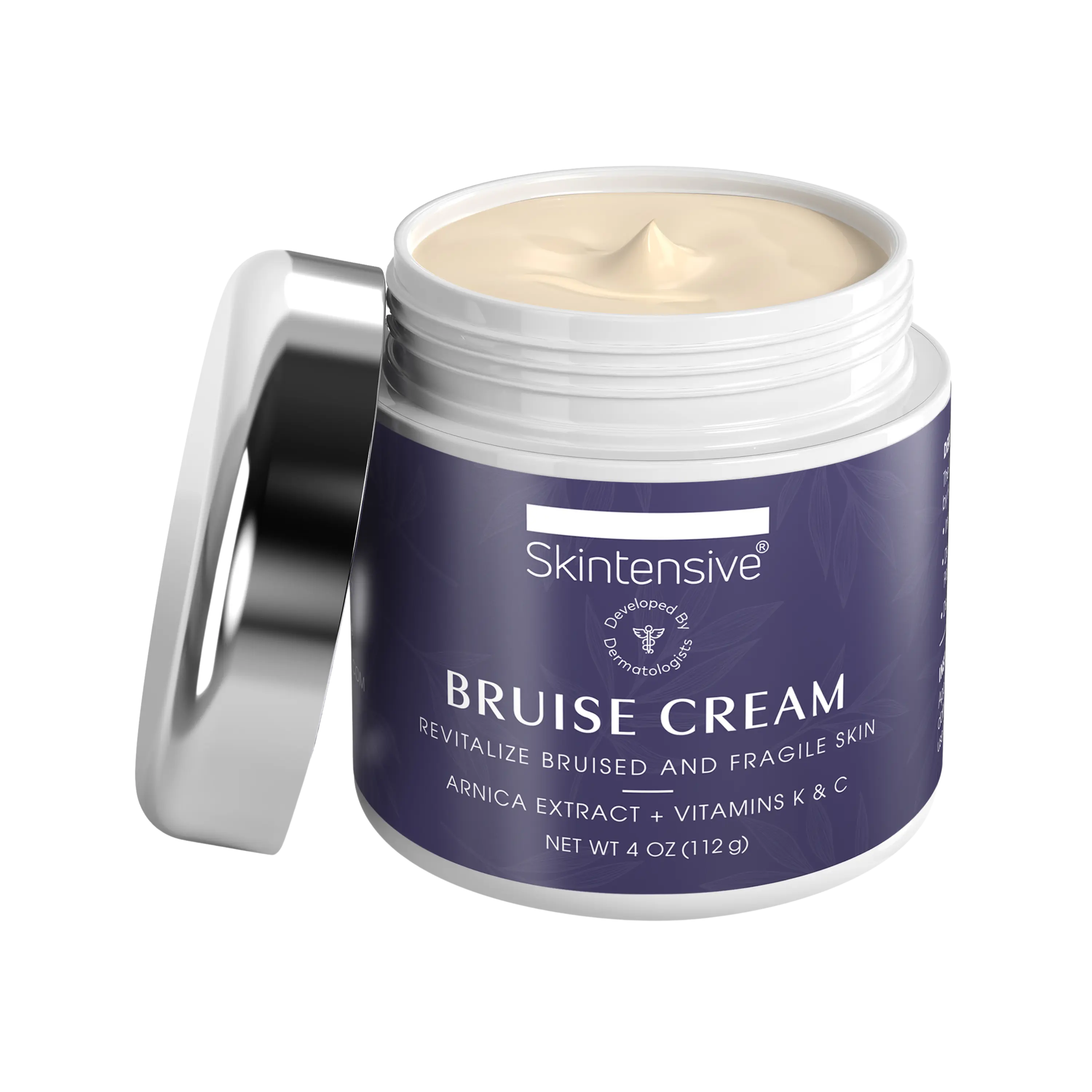
A well-formulated bruise cream isn't necessarily the one with the most recognizable label or the highest price. Instead, it's the one with a thoughtfully designed formula that supports healthy-looking skin, helps improve the appearance of skin discoloration, and fits comfortably into your daily skincare routine.
Table of Contents
- What Makes a Good Bruise Cream?
- Why Ingredient Quality Matters More Than Marketing
- The Three Ingredients That Often Define a Bruise Cream
- Arnica Montana: The Ingredient Most People Recognize
- Vitamin K: A Popular Addition to Modern Bruise Creams
- Hesperidin: An Ingredient More Consumers Are Discovering
- Supporting Ingredients That Complete a Well-Rounded Formula
- Why Formulation Matters More Than Individual Ingredients
- How to Read a Bruise Cream Ingredient Label
- The Bottom Line
- Frequently Asked Questions
If you're shopping for a bruise cream, you've probably noticed that many products make similar promises while highlighting different ingredients. Some emphasize arnica, others feature vitamin K, and newer formulations combine botanical extracts, vitamins, and moisturizing ingredients into a single cream. With so many options available, understanding the ingredient list is often more valuable than focusing on the brand name.
A well-formulated bruise cream isn't necessarily the one with the most recognizable label or the highest price. Instead, it's the one with a thoughtfully designed formula that supports healthy-looking skin, helps improve the appearance of skin discoloration, and fits comfortably into your daily skincare routine.
This guide explains the most common ingredients found in bruise creams, what each ingredient contributes to a cosmetic skincare formula, and how to compare products with confidence. Rather than ranking brands, we'll focus on the science behind modern skincare formulations so you can make an informed purchasing decision.
What Makes a Good Bruise Cream?
When consumers first begin comparing bruise creams, they often look for one "miracle ingredient." In reality, well-designed skincare products rarely depend on a single ingredient. Instead, they combine several ingredients that complement one another.
A quality bruise cream typically contains three types of ingredients:
- Botanical extracts
- Vitamins and antioxidants
- Moisturizing and skin-conditioning ingredients
Each category contributes something different to the overall formulation.
Botanical extracts are often selected because they have a long history of use in topical skincare products. Vitamins provide antioxidant support and complement other ingredients in the formula, while moisturizing ingredients help keep skin feeling soft, smooth, and comfortable after application.
Instead of asking, "Which ingredient is the strongest?" it can be more helpful to ask, "How well do these ingredients work together?"

Why Ingredient Quality Matters More Than Marketing
The front of a product package usually highlights one or two ingredients. However, the ingredient list tells a much more complete story.
For example, two bruise creams may both advertise arnica on the label, but their overall formulations can be very different. One may include moisturizing ingredients that support the skin's moisture barrier, while another may rely almost entirely on a single botanical extract.
This is one reason experienced skincare shoppers often spend more time reading ingredient labels than advertising copy.
A balanced formula may include:
- Botanical extracts that complement one another
- Vitamins that provide antioxidant support
- Moisturizers that leave skin feeling hydrated
- Skin-conditioning ingredients that improve texture and comfort
Looking at the complete ingredient list gives you a better understanding of the product than focusing on a single featured ingredient.
The Three Ingredients That Often Define a Bruise Cream
While every manufacturer develops its own formula, three ingredients appear repeatedly in discussions about bruise creams because they are among the most recognizable ingredients consumers look for.
These include:
- Arnica Montana
- Vitamin K
- Hesperidin
Rather than competing against one another, these ingredients are often included together in more comprehensive skincare formulations.
Understanding their individual roles makes it much easier to compare products objectively.
Arnica Montana: The Ingredient Most People Recognize
Arnica Montana flower extract is perhaps the best-known botanical ingredient associated with bruise creams.
Native to mountainous regions of Europe, Arnica has been included in topical skincare products for generations and remains one of the first ingredients many consumers search for when comparing bruise creams.
Today, Arnica is commonly incorporated into cosmetic creams designed to improve the appearance of bruised-looking skin while supporting a comfortable, moisturized skin feel.
One reason Arnica remains a popular skincare ingredient is that formulators often pair it with moisturizing ingredients, vitamins, and other botanical extracts. Instead of serving as the only feature of a formulation, it is frequently combined with vitamins, botanical extracts, and moisturizing ingredients to create a more balanced skincare product.
When comparing creams that contain Arnica, don't stop at the front label. Take a closer look at the complete ingredient list. The surrounding ingredients often determine how nourishing, moisturizing, and pleasant the overall formula feels during daily use.
What Should You Look for Alongside Arnica?
If Arnica is the headline ingredient, the supporting ingredients matter just as much.
Many premium formulations pair Arnica with ingredients such as:
- Vitamin K
- Hesperidin
- Vitamin E (Tocopherol)
- Glycerin
- Coconut Oil
- Centella asiatica
- Vitamin C derivatives
These complementary ingredients create a more complete skincare experience by moisturizing the skin, supporting the skin's moisture barrier, and improving the overall feel of the cream.
Rather than asking whether a cream contains Arnica, ask whether it contains a balanced combination of ingredients that work well together.
Vitamin K: A Popular Addition to Modern Bruise Creams
Vitamin K has become one of the most recognizable ingredients found in modern bruise creams.
Many consumers specifically search for products containing vitamin K because they are interested in creams formulated to promote a more even-looking skin tone and improve the appearance of skin discoloration.
One form you'll occasionally find on ingredient labels is Menaquinone-7 (Vitamin K2), a stable form of vitamin K that is increasingly used in premium cosmetic formulations.
Like Arnica, vitamin K is rarely intended to stand alone. Instead, it is often formulated alongside as part of a broader skincare formulation that also includes moisturizers, antioxidants, and botanical ingredients.
When comparing ingredient labels, think of vitamin K as one piece of a larger formulation rather than the single factor that determines product quality.
Hesperidin: An Ingredient More Consumers Are Discovering
Although it isn't as widely recognized as Arnica or vitamin K, Hesperidin has become increasingly popular in premium skincare products.
Hesperidin is a naturally occurring bioflavonoid derived from citrus fruits. In cosmetic formulations, it complements other botanical ingredients while supporting healthy-looking skin and contributing to a more refined overall formula.
Because Hesperidin is less familiar to many shoppers, products containing it often stand out among more traditional bruise creams that rely on only one featured botanical ingredient.
When combined with Arnica, Vitamin K, antioxidants, and moisturizing ingredients, Hesperidin becomes part of a multi-ingredient approach that focuses on the overall appearance and condition of the skin rather than a single cosmetic benefit.
For consumers comparing ingredient labels, Hesperidin is often a sign that the manufacturer has invested in a more thoughtfully developed formulation instead of relying on one recognizable ingredient alone.
Supporting Ingredients That Complete a Well-Rounded Formula
While ingredients like Arnica Montana, Vitamin K, and Hesperidin often receive the most attention, they represent only part of what makes a bruise cream enjoyable to use. A thoughtfully formulated cream also includes ingredients that moisturize, condition, and help maintain the skin's natural moisture balance.
These supporting ingredients influence how the cream feels during application, how well it absorbs, and how comfortably it fits into a daily skincare routine.
Rather than viewing them as "filler" ingredients, it's helpful to think of them as the foundation that allows the featured botanical ingredients to work together in a pleasant, easy-to-use formula.
Centella Asiatica: A Favorite in Modern Skincare
Centella asiatica has become one of the most respected botanical ingredients in skincare over the past decade.
Often referred to simply as "Centella" or "Cica," this botanical extract appears in moisturizers, facial creams, serums, and skincare products designed for delicate-feeling skin.
Consumers often appreciate Centella because it contributes to formulas that leave skin feeling hydrated, soft, and comfortable. It pairs especially well with moisturizing ingredients and botanical extracts, making it a natural addition to premium bruise creams.
One advantage of Centella is its versatility. Whether included in a lightweight lotion or a richer cream, it complements ingredients like Arnica and Vitamin K without overwhelming the formulation.
When reviewing ingredient labels, finding Centella alongside other botanical extracts often suggests that the manufacturer has developed the product with overall skin comfort in mind rather than relying on a single featured ingredient.
Laminaria Saccharina: Marine-Derived Skincare
Another ingredient becoming increasingly common in premium skincare is Laminaria saccharina extract, a marine-derived botanical sourced from sea kelp.
Marine botanicals have gained popularity because they contribute to conditioning and moisturizing formulations while complementing more traditional plant-based ingredients.
Rather than serving as the primary focus of a bruise cream, Laminaria saccharina works alongside other ingredients to create a balanced skincare experience.
Consumers interested in botanical skincare often appreciate formulas that combine land-based plants, marine extracts, vitamins, and moisturizers into one cohesive product.
This multi-ingredient approach reflects a broader trend in skincare: combining diverse ingredients that each contribute something unique to the overall formula.
Vitamin E: An Antioxidant That Complements the Formula
Vitamin E, listed on ingredient labels as Tocopherol, is one of the most recognizable vitamins used in cosmetic skincare.
Its popularity comes from its versatility. It is included in facial moisturizers, body creams, lotions, and many botanical skincare products because it helps condition the skin and provides antioxidant support against everyday environmental stressors.
When included in a bruise cream, Vitamin E complements ingredients like Arnica, Hesperidin, and Vitamin K while contributing to a moisturizing skincare routine.
Consumers frequently recognize Vitamin E because it has been a trusted cosmetic ingredient for decades.
Instead of functioning independently, it performs best as part of a balanced formulation containing botanical extracts and moisturizing ingredients.
Vitamin C Derivatives: Supporting a Brighter-Looking Complexion
Many skincare enthusiasts recognize Vitamin C as an ingredient associated with bright-looking skin.
In some cosmetic creams, the ingredient appears as Ascorbyl Palmitate, an oil-soluble form of Vitamin C that integrates well into moisturizing formulations.
Vitamin C derivatives are commonly included in skincare because they complement antioxidant-rich formulations and contribute to products designed to improve the appearance of dull-looking skin.
Although shoppers may focus on larger headline ingredients like Arnica, smaller supporting ingredients such as Ascorbyl Palmitate often contribute to the overall sophistication of a cosmetic formulation.
Looking at the complete ingredient list rather than one featured extract provides a better understanding of the product as a whole.
Glycerin: One of Skincare's Most Important Moisturizers
If there is one ingredient that appears in countless skincare products, it is glycerin.
Glycerin is a humectant, meaning it attracts moisture to the surface of the skin and helps maintain hydration throughout the day.
While consumers rarely purchase a bruise cream because it contains glycerin, they often notice the difference when it is absent.
A cream with effective moisturizing ingredients typically feels smoother during application, absorbs comfortably, and leaves skin feeling soft instead of dry.
For this reason, experienced skincare shoppers often view glycerin as one of the most valuable supporting ingredients in any cosmetic cream.
Coconut Oil: Rich Moisture and Skin Conditioning
Coconut oil remains one of the most recognizable botanical oils used in skincare.
Its rich texture makes it especially useful in creams designed to nourish and soften the skin.
When combined with ingredients like glycerin and Caprylic/Capric Triglyceride, coconut oil contributes to a formula that spreads easily while helping reduce the feeling of dryness after application.
Consumers who enjoy richer creams often appreciate formulations containing coconut-derived ingredients because they provide a comfortable skin feel without requiring frequent reapplication.
As with every ingredient discussed throughout this guide, coconut oil works best as part of a complete formulation rather than serving as the sole reason to purchase a product.
Caprylic/Capric Triglyceride: Improving Texture and Application
Although its name sounds highly technical, Caprylic/Capric Triglyceride is a common cosmetic ingredient derived from coconut oil and glycerin.
Its primary purpose is improving the texture and spreadability of creams.
This ingredient helps products glide smoothly across the skin without leaving a heavy or greasy finish.
Many premium skincare products include Caprylic/Capric Triglyceride because consumers generally prefer creams that absorb comfortably while maintaining a luxurious feel.
While it may not receive attention in advertising, it plays an important role in the overall user experience.
Why Formulation Matters More Than Individual Ingredients
One of the biggest mistakes consumers make is comparing products based on only one ingredient.
A label that highlights Arnica may seem appealing, but the complete ingredient list provides a much clearer picture of how the product was designed.
Consider these two examples.
One cream contains Arnica but few moisturizing ingredients.
Another combines Arnica with Vitamin K, Hesperidin, Centella asiatica, Laminaria saccharina, Vitamin E, Vitamin C, glycerin, coconut-derived moisturizers, and other conditioning ingredients.
Both products contain Arnica.
However, the second formulation offers a broader combination of botanical extracts, antioxidants, moisturizers, and skin-conditioning ingredients that work together to create a richer cosmetic experience.
This illustrates an important principle in skincare:
The effectiveness of a cosmetic formulation depends less on a single hero ingredient and more on how thoughtfully the ingredients complement one another.
How to Read a Bruise Cream Ingredient Label

When comparing products online or in a store, it helps to move beyond the marketing language on the front of the package.
Instead, ask a few practical questions.
Does the formula include multiple botanical ingredients?
Products containing several botanical extracts often provide a more comprehensive skincare formulation than products built around a single featured ingredient.
Are moisturizing ingredients included?
Look for ingredients such as:
- Glycerin
- Coconut Oil
- Caprylic/Capric Triglyceride
- Butylene Glycol
These ingredients contribute to hydration and help improve how the cream feels during daily use.
Does the formula include antioxidant ingredients?
Ingredients such as Vitamin E and Vitamin C derivatives complement botanical extracts while supporting healthy-looking skin as part of a daily skincare routine.
Is the ingredient list transparent?
Manufacturers that clearly disclose their ingredients make it easier for consumers to compare products and understand what they're purchasing.
Transparency builds confidence and helps shoppers make informed decisions.
The Bottom Line
A well-formulated bruise cream isn't defined by one ingredient.
Instead, it is the result of a thoughtfully balanced formula that combines botanical extracts, vitamins, antioxidants, moisturizers, and skin-conditioning ingredients into a product that fits comfortably within a daily skincare routine.
Understanding how these ingredients work together allows you to compare products based on formulation quality rather than marketing claims alone.
Whether you're shopping for your first bruise cream or comparing several options, reading the ingredient label carefully is one of the most effective ways to choose a product that aligns with your skincare preferences and goals.
In the end, informed consumers often make the best purchasing decisions—not because they recognize one ingredient, but because they understand how the complete formula contributes to healthy-looking, well-cared-for skin.
Frequently Asked Questions
What ingredients should I look for in a bruise cream?
Many consumers look for a combination of botanical extracts, vitamins, antioxidants, and moisturizing ingredients. Rather than focusing on one ingredient alone, consider how the complete formulation supports healthy-looking skin and fits your skincare routine.
Is Arnica the only important ingredient?
No. Arnica is one of the best-known botanical ingredients, but many modern formulations also include ingredients such as Vitamin K, Hesperidin, Centella asiatica, Vitamin E, glycerin, and other moisturizing ingredients that complement the overall formula.
Why do some bruise creams contain several botanical extracts?
Each botanical ingredient contributes different cosmetic properties to the formulation. Combining several complementary ingredients creates a more balanced skincare product than relying on a single extract.
Are expensive bruise creams always better?
Not necessarily. A thoughtfully developed ingredient list, transparent labeling, and a well-balanced formulation are often better indicators of quality than price alone.
Why should I read the entire ingredient list?
The complete ingredient list tells you far more about a product than the ingredients highlighted on the front of the package. Looking at the full formulation helps you compare products more confidently and understand how the ingredients work together.