

What Is the Best Bruise Cream?
When evaluating bruise creams, it helps to know what to look for to judge comfort, texture, and cosmetic benefits. A well-formulated bruise cream is best viewed as a moisturizer designed for skin that looks easily marked or prone to visible discoloration.
Quick summary
- The best bruise cream is a comfortable daily moisturizer that supports hydrated, healthy-looking skin.
- Look for ingredients commonly used in skincare for the appearance of uneven-looking tone and visible discoloration.
- Consistency matters more than “overnight” promises.
If discoloration is new, spreading, painful, or concerning, consult a healthcare professional.
🔹 TL;DR
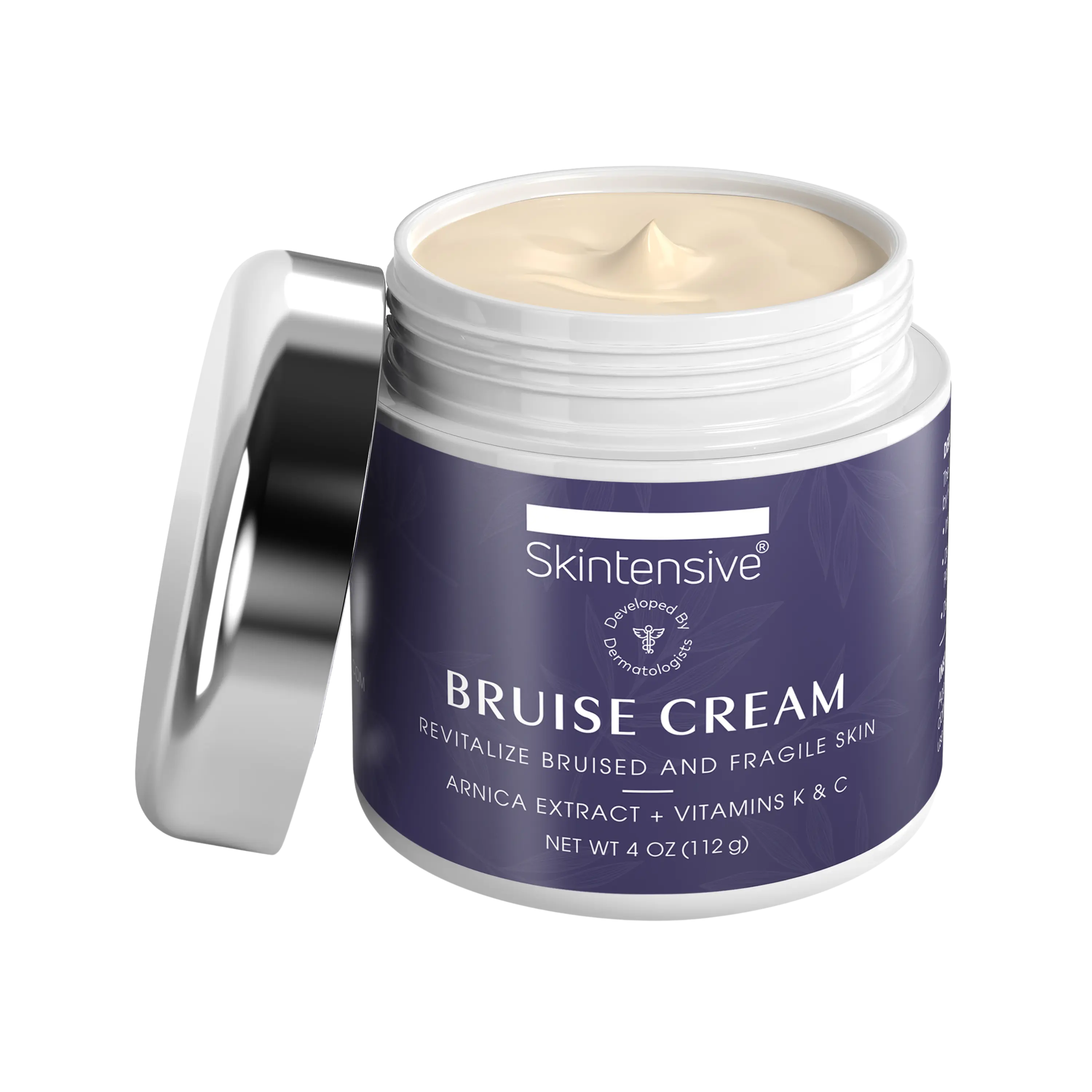
Skintensive’s Bruise Cream is dermatologist-developed and formulated with arnica plus vitamins K, C, and E in a soothing coconut oil base. It is designed to moisturize and support the look of bruise-prone skin, helping skin feel comfortable and look well-conditioned.
💡 Featured Snippet
The best bruise cream combines arnica with vitamins K, C, and E in a moisturizing base to support hydrated, healthy-looking skin and help improve the appearance of visible discoloration over time.
How to choose the best bruise cream
When evaluating bruise creams, focus on a product’s feel, consistency, and cosmetic purpose. Be cautious of marketing that says a bruise cream works overnight. Instead, think of a bruise cream as a daily moisturizer with the added benefit of supporting the look of skin that is prone to visible discoloration.
Applying a moisturizing cream one to three times per day can help keep skin feeling comfortable and well-conditioned, especially on areas that tend to look easily marked.
Comfort and slip
Choose a cream that spreads easily and feels pleasant, so daily use is realistic.
Hydration without greasiness
A good formula moisturizes deeply and leaves skin looking smooth, not slick.
Ingredients to look for
Next, look for ingredients that fit a cosmetic goal: hydration, comfort, and the appearance of more even-looking tone. Here are a few commonly used options in bruise creams.
-
Arnica
A botanical ingredient commonly used in topical cosmetic products positioned to support the look of skin that appears easily marked or uneven in tone.
-
Vitamin K
Often included in skincare formulas focused on the appearance of uneven-looking skin tone.
-
Vitamins C and E
Antioxidant vitamins widely used in skincare to support brighter-looking, well-conditioned skin.
-
A moisturizing base
A nourishing base can help soften and smooth the look of skin, supporting a comfortable daily routine.
How often should bruise cream be applied?
Many people apply a bruise cream like a moisturizer one to three times per day. Consistent use helps maintain hydration and supports the look of well-conditioned skin, especially on areas that look easily marked.
Tip: Apply to clean, dry skin and let it absorb before dressing to reduce transfer.
Skintensive Bruise Cream overview
The Harvard-trained dermatologist founders of Skintensive developed Skintensive Bruise & Scar Cream with a high concentration of arnica, complemented by vitamins K, C, and E, blended into a creamy coconut oil base that goes on smoothly without a greasy feel.
If you are looking for a bruise cream, prioritize a formula that moisturizes well, feels comfortable, and fits into a consistent routine that supports healthy-looking skin.
Related reading: What to know about solar, actinic, and senile purpura
Interactive ingredient glossary
Search and tap terms for cosmetic-friendly definitions.
Arnica montana
A botanical ingredient used in topical cosmetic products that are positioned to support the look of more even-toned, healthy-looking skin.
Vitamin K
Commonly included in cosmetics focused on the appearance of uneven-looking tone and balanced-looking skin.
Vitamin C
An antioxidant used in skincare to support a brighter-looking complexion and the look of more even tone.
Vitamin E
An antioxidant vitamin used in moisturizers to help skin feel soft, comfortable, and well-conditioned.
Coconut oil base
A nourishing base that helps soften skin and supports a smooth application experience.
❓ FAQ Section
Q1: What should I look for in a bruise cream?
Look for a cosmetic moisturizer that feels comfortable and supports hydration, plus ingredients commonly used in skincare for the appearance of uneven-looking tone and visible discoloration.
Q2: How often should bruise cream be applied?
Many people apply a bruise cream like a moisturizer one to three times per day, depending on comfort and label directions.
Q3: Can bruise cream be used regularly on bruise-prone areas?
Yes. Used consistently as a moisturizer, it can help keep skin feeling comfortable and looking well-conditioned, which can be helpful for areas that look easily marked.
Q4: Is arnica cream gentle enough for sensitive or aging skin?
Many arnica-based cosmetic creams are formulated to be gentle and fragrance-free. Patch test first and follow label directions, especially if your skin is sensitive.