

Top 5 Cosmetic Uses of Arnica Cream
If you prefer a botanically inspired routine, arnica cream is a popular choice. This guide focuses on cosmetic-friendly ways people use arnica creams to support comfortable, hydrated, healthy-looking skin and the appearance of visible discoloration.
Quick summary
- Arnica creams are often used to support the look of visible discoloration and keep skin feeling comfortable.
- Many people apply them after activity as part of a soothing, moisturizing routine.
- Choose gentle formulas and avoid use on broken skin.
If you have questions about a medical condition, diagnosis, or treatment, consult a healthcare professional.
Introduction to arnica cream
Arnica cream is widely used in cosmetic routines for its botanical heritage and its comfortable skin feel. Many people choose arnica creams as part of a holistic, comfort-forward approach to caring for skin that looks easily marked or feels sensitive after activity.
This article focuses on cosmetic use and appearance-based language. If you are using a topical product alongside physician-directed care, follow your clinician’s guidance for what is appropriate for you.
The popularity of arnica cream
Arnica cream’s popularity often comes down to versatility. People like that it can fit into different routines, including post-activity comfort, bruise-prone skin care, and everyday moisturization. When used as directed, it can be a simple addition to a wellness-minded routine focused on skin comfort and healthy-looking results.
As with any topical product, it is smart to patch test first and to avoid applying to broken skin. If you are unsure whether a product is right for you, consult a healthcare professional.
Top use 1: Post-activity comfort
After a long day or a workout, many people reach for a cream that feels soothing on skin. Arnica creams are often used as part of a gentle massage routine to support a comfortable, cared-for feel.
How people use it
- Apply to intact skin after showering or after activity
- Massage in with light pressure for a comforting finish
- Follow with a basic moisturizer if your skin feels dry
Top use 2: Supporting the look of bruises
Visible discoloration can be frustrating. Arnica creams are commonly used in cosmetic routines to support the look of bruise-prone areas and help skin feel comfortable. For best results, focus on consistency and moisturization rather than quick-fix promises.
Routine tip
Apply a thin layer to clean, dry, intact skin and massage gently. Reapply based on label directions.
Top use 3: Soothing muscle-feel after exertion
Some people like arnica creams after exercise for the sensory comfort of a topical massage and a rich, moisturizing finish. Pairing a cream with gentle massage can help you wind down and keep skin from feeling dry or tight.
-
Comfort-forward massage
Use light pressure and slow strokes, focusing on how your skin feels.
-
Hydration support
Choose formulas with nourishing emollients if your skin tends to feel dry after activity.
Top use 4: Comfort-forward massage routine for hands and joints
Many people enjoy using a rich cream on hands, elbows, knees, and other areas that can look dry or feel overworked. Arnica creams are often chosen for a calming-feeling massage ritual and a well-conditioned look.
If you have persistent joint discomfort or symptoms that concern you, consult a healthcare professional.
Top use 5: Enhancing the look and feel of skin
Beyond post-activity use, arnica creams can simply function as moisturizers. Many formulas are designed to soften skin, support a smoother-looking surface, and help skin feel comfortable.
-
Dryness and texture
Regular moisturization can help improve the look of dryness and support a smoother-looking finish.
-
The look of uneven tone
Cosmetic routines often include ingredients that support brighter-looking, more even-looking skin.
How to use arnica cream
1. Cleanse the area
Apply to clean, dry, intact skin for the most comfortable experience.
2. Apply a thin layer
Massage gently until absorbed. Use light pressure, especially on sensitive-looking skin.
3. Follow label directions
Many people apply 2 to 3 times daily, depending on comfort and product instructions.
4. Avoid broken skin
Do not apply to open wounds or irritated skin. Discontinue use if irritation occurs.
If you are pregnant, breastfeeding, on medications, or managing a health condition, consult a healthcare professional before use.
Skintensive product highlight
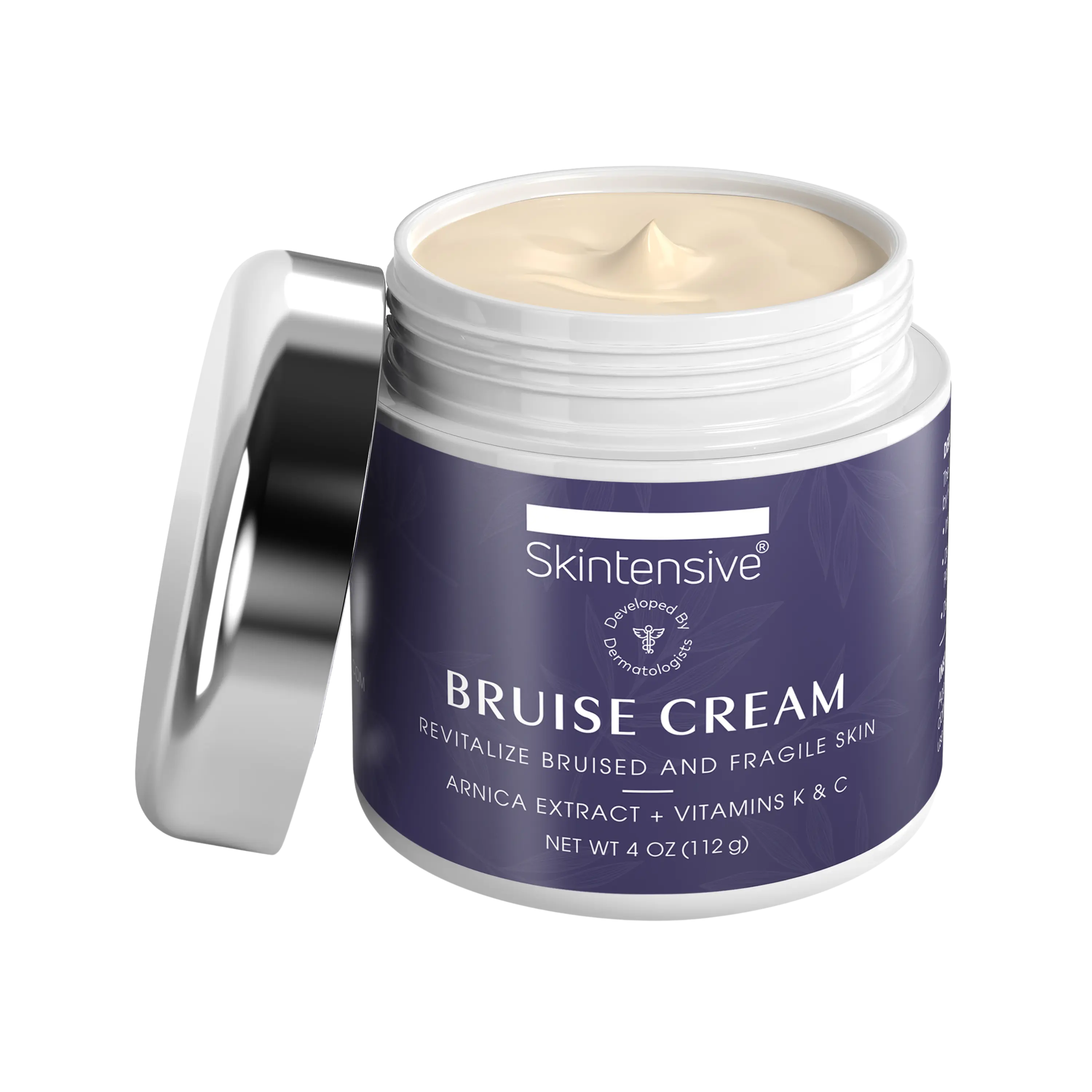
Skintensive Bruise & Scar Cream (Arnica)
A fragrance-free, rich moisturizer featuring arnica in a nourishing base. Many people use it to support the look of visible discoloration and keep skin feeling comfortable and well-conditioned.
Interactive ingredient glossary
Search and tap terms for cosmetic-friendly definitions.
Arnica montana
A botanical ingredient used in topical cosmetic products positioned to support the look of healthy-looking skin, including skin that appears easily marked or uneven in tone.
Emollients
Moisturizing ingredients that help soften skin, improve slip, and support a comfortable feel.
Antioxidants
Ingredients commonly used in skincare to support a fresh-looking appearance and help maintain healthy-looking skin in everyday environments.
Patch test
A simple way to check compatibility by applying a small amount to a small area first, then observing for irritation before broader use.
FAQs
Is arnica cream safe for everyone?
Arnica-based cosmetics are commonly used, but it is best to avoid applying to broken or irritated skin and to patch test first. If you are pregnant, breastfeeding, or managing a health condition, consult a healthcare professional before use.
How often should arnica cream be applied?
Follow the product’s label directions. Many people apply a thin layer 2 to 3 times per day to intact skin, depending on comfort.
Can arnica cream be used by pregnant or breastfeeding women?
If you are pregnant or breastfeeding, consult your healthcare provider before using new topical products, including arnica creams.
Are there possible side effects of arnica cream usage?
Some people may experience irritation or an allergic reaction. If itching, rash, or swelling occurs, discontinue use and consult a healthcare professional.
These FAQs provide general cosmetic skincare information and are not a substitute for professional medical advice.