

Pigmented Purpura and Capillaritis: Understanding the Look of Red Brown Patches
Noticing unexplained red, rust, or brown patches on the lower legs can be unsettling. You might see terms like capillaritis, pigmented purpura, or Schamberg’s used to describe the look and pattern of these patches.
Zero-click summary
- These terms are often used to describe a specific appearance of red-brown patches, usually on lower legs.
- Skincare can support comfort and hydration, and it can help improve the appearance of uneven-looking tone.
- If patches are new, spreading, or persistent, a clinician can help confirm what you are seeing.

Photo note: Patient-provided image showing a change in appearance over time while using a moisturizer-based routine. Individual results vary.
Pigmented purpura, capillaritis, and Schamberg’s
These words are commonly used in dermatology to describe patterns of visible discoloration on the skin. In everyday language, people often use them to explain red-brown patches that can appear on the lower legs.
This article is written for cosmetic skincare education. It does not diagnose any condition. If you are concerned about a new or changing patch, consider an in-person evaluation.
What the patches can look like
People often describe these patches as:
- Flat red, rust, or brown areas on the lower legs
- Speckled dots that can look “peppery” from a normal viewing distance
- Clusters that look more noticeable after warmth, activity, or long days on your feet
Appearance can vary widely. A clinician can help confirm the cause, especially if the look is new, asymmetric, or spreading.
When to check in with a clinician
Consider professional guidance if you notice any of the following:
- Patches that appear suddenly or spread quickly
- Visible changes that persist and do not match your typical skin pattern
- Any concern that feels unclear or worrisome
A clinician may discuss different possibilities, and may recommend evaluation steps. This article does not replace that process.
Cosmetic care: comfort and tone support
Cosmetic skincare cannot address medical causes, but it can support how skin looks and feels. A comfort-first routine may help skin look smoother and more even in tone.
Hydrate consistently
Moisturized skin often looks smoother and more balanced in appearance.
Keep it gentle
Avoid harsh rubbing. Use light, comfortable application pressure.
Support the look of tone
Choose formulas designed to help improve the appearance of discoloration.
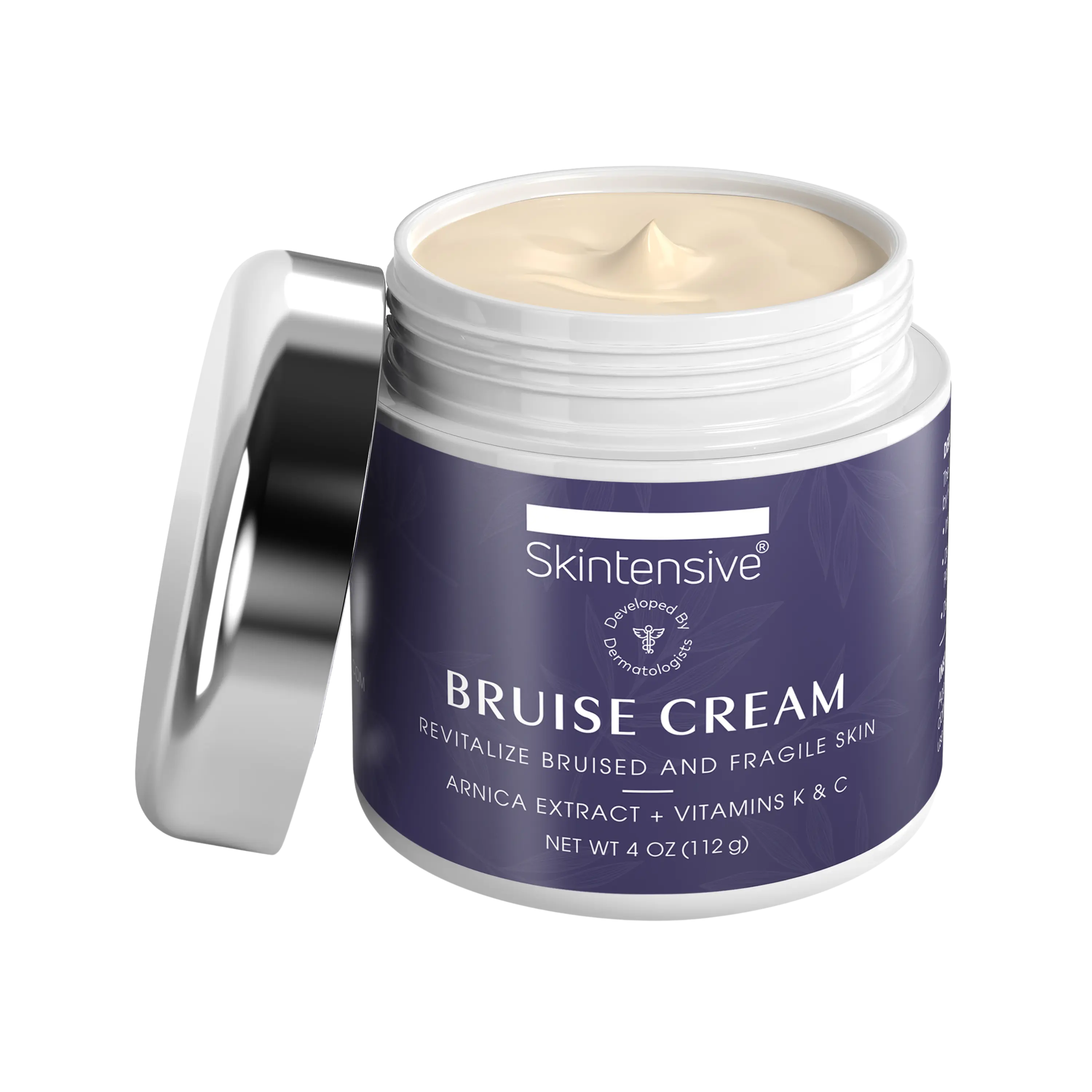
Skintensive Bruise Cream is a moisturizing formula featuring arnica and vitamin K, designed to support healthy-looking skin and help improve the appearance of visible discoloration. Individual results vary.
Interactive glossary
Quick definitions for common terms you might see in a dermatology visit.
Cosmetic note: These definitions are informational. For diagnosis or treatment questions, consult a medical professional.
Results
FAQs
Is pigmented purpura the same as capillaritis?
They are terms that are often discussed together when describing similar-looking red-brown patches. A clinician can confirm the right label for your specific pattern.
Can topical skincare help?
Cosmetic products can help support hydration and a smoother-looking surface, and they can help improve the appearance of discoloration. They do not replace medical evaluation for persistent concerns.
What should I avoid saying in skincare claims?
When discussing cosmetics, it is best to keep language focused on appearance, hydration, comfort, and healthy-looking skin, rather than medical outcomes.